


How To Make Good Pictures - The Kodak Manual For Amateur Photographers
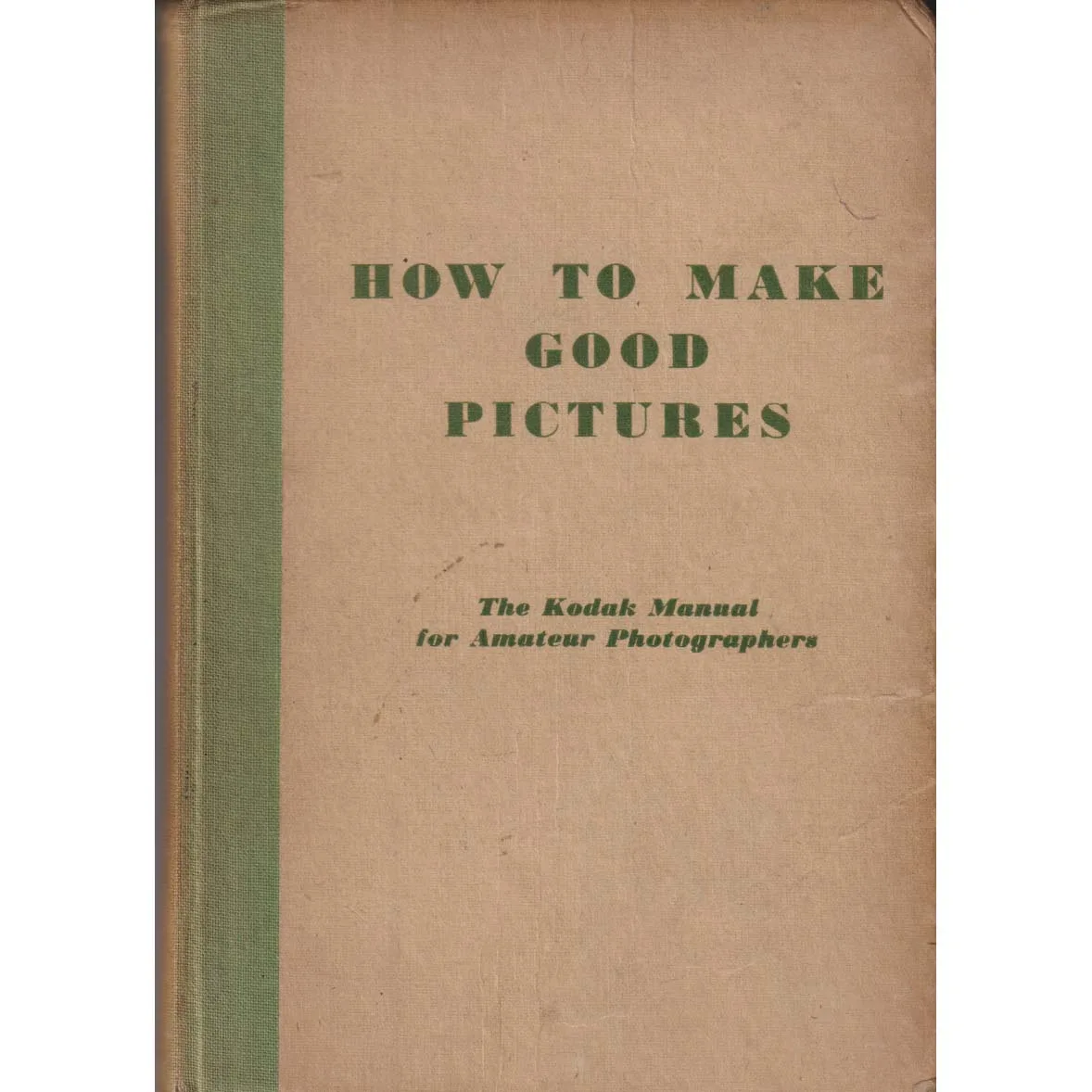
Publisher: Kodak Limited
Format: Hardback
ISBN: none
How To Make Good Pictures – The Kodak Manual for Amateur Photographers (1943) by Kodak Limited — Kodak Limited
ISBN: None (because in 1943 the only “scan code” was your ability to focus)
Condition: Good (as sold by Crappy Old Books, where “Good” means “still developing nicely”)
Before your phone decided what your face looks like, before “portrait mode” invented cheekbones, and long before an algorithm cheerfully sharpened your dinner, there was a simpler, braver age: the age of Kodak telling you, firmly but politely, how to take a photograph without ruining it.
How To Make Good Pictures is exactly what it says—an earnest, practical 1943 manual aimed at the amateur photographer who has a camera, some film, and the noble dream of producing an image that doesn’t resemble a haunted fog bank. It’s part instruction book, part confidence booster, part gentle scolding: hold it steady, mind the light, stop cutting off Auntie’s head, and for heaven’s sake don’t point it straight at the sun.
And the year matters. 1943 is not a time you associate with leisurely hobbies and artistic self-improvement, yet here is Kodak, steadfastly insisting that even during a world at war, you can still take a decent picture of the garden, the dog, or the children pretending not to pose. There’s something oddly comforting about it: the idea that ordinary life is worth recording, and that doing it well is a skill, not a filter.
The tone is peak mid-century instructional confidence: reassuring, authoritative, and slightly amused by your inevitable mistakes. It explains exposure and composition with the calm certainty of a company that fully expects you to follow directions, because film is not cheap and neither is your patience. You’ll find guidance on framing, lighting, focus, action shots, portraits, landscapes—everything the modern camera does for you automatically, except here you have to do it yourself, with your hands and your brain, like a pioneer.
The irony is that the title promises “good pictures,” as if this is a neat, achievable destination. The manual knows better. “Good” is work. “Good” is attention. “Good” is learning to see. And once you’ve read it, you’ll start noticing all the things you didn’t notice before: where the light falls, what a background is doing, why your subjects look like they’re being documented for official purposes. You may even catch yourself thinking in Kodak sentences, which is a quietly alarming side effect.
As an object, it’s also a little piece of photographic history—an era when Kodak wasn’t just a brand but a whole cultural infrastructure. This is the world of film rolls, careful counting, the suspense of development, and the absolute thrill of getting it right because you couldn’t immediately retake it fourteen times. It’s nostalgia, yes—but it’s also craft.
This copy is listed as Good, sold by Crappy Old Books, meaning it’s solid, readable, and still perfectly capable of teaching you things you thought your smartphone invented. Expect honest age: perhaps a bit of wear, some gentle toning, the kind of patina that suits a practical book that was meant to be used, not worshipped.
Buy it if you like:
-
vintage how-to manuals with authority and charm
-
photography as a skill rather than a swipe
-
mid-century design, clear diagrams, and sensible advice
-
owning a book that makes you feel both capable and slightly judged
How To Make Good Pictures (1943) is Kodak doing what Kodak did best: teaching ordinary people to document their ordinary lives with a little more care—and a lot less blur. In Good condition from Crappy Old Books, ready to remind you that the best camera has always been the one that makes you pay attention.
Keep browsing: See more Art books Other books by Kodak Limited
